





Shock absorbers are easy to overlook because they usually wear gradually rather than failing suddenly. You may simply notice that your car feels less stable, takes longer to settle after a bump, or behaves differently when braking or cornering.
The important thing is not to judge their condition by comfort alone. Shock absorbers help control the movement of the vehicle and keep the tyres in contact with the road. When they become worn, handling, braking stability and tyre wear can all be affected.
For drivers in Dubai, frequent speed bumps, rough surfaces, heavy traffic and regular stop-and-go driving can also put additional demands on suspension components.
So, how can you tell when your shock absorbers need attention?
What Do Shock Absorbers Do?
Shock absorbers control how quickly the suspension moves after the car encounters a bump, dip or uneven road surface. Without effective damping, the springs can continue moving after the initial impact, causing the vehicle to bounce or feel unsettled.
Good shock absorbers help the car:
- Stay more stable over uneven roads
- Maintain better tyre contact with the road
- Reduce excessive bouncing
- Control body movement during braking and cornering
- Provide a more controlled and comfortable ride
They work as part of the wider suspension system, so a similar symptom does not always mean the shock absorber itself has failed.
7 Signs Your Shock Absorbers May Need Replacing
1. Your Car Keeps Bouncing After a Bump
One of the most noticeable signs is excessive bouncing.
After driving over a speed bump or uneven section of road, the vehicle should settle relatively quickly. If it continues to bounce or feels like it is floating for several moments, the shock absorbers may no longer be controlling suspension movement effectively.
This can become particularly noticeable on roads with repeated bumps or uneven surfaces.
2. The Front of the Car Dives Under Braking
Does the front of your car dip noticeably when you brake?
Some movement is normal, but excessive nose diving can indicate that the suspension is not controlling the transfer of the vehicle’s weight properly. Worn shocks are one possible cause.
If the vehicle also feels unstable during hard braking, it is worth having the suspension inspected rather than assuming the issue is only related to the brakes.
3. The Car Leans Excessively Around Corners
A vehicle naturally moves slightly when turning. However, excessive body roll can be a warning sign of reduced suspension control.
You may notice the car leaning more than usual when taking a corner or changing lanes, particularly at higher speeds.
If the steering feels less precise or the car takes longer to settle after a turn, have the suspension checked. Worn shocks are one possible explanation, although other suspension components can produce similar symptoms.
4. Your Tyres Are Wearing Unevenly
Take a look at your tyre tread.
If you notice irregular patches, scalloped areas or repeated high-and-low sections across the tread, worn shock absorbers could be contributing to the problem. Poor damping can allow the tyre to move excessively against the road surface, contributing to abnormal wear.
However, uneven tyre wear can also result from incorrect wheel alignment, tyre pressure or other suspension problems.
That is why replacing the shock absorber without checking the underlying cause may not solve the problem.
5. You Can See Fluid Around the Shock Absorber
A visual inspection can sometimes reveal a problem.
If the shock absorber body is visibly wet with hydraulic fluid or there is fluid dripping from it, the component should be inspected by a qualified technician. Significant leakage can indicate a failed seal or damaged shock absorber.
A small amount of residue does not necessarily mean immediate failure, so the condition should be assessed rather than relying on appearance alone.
6. You Hear Knocking or Clunking Sounds
A knocking, rattling or clunking noise from the suspension, particularly when driving over bumps, should not be ignored.
The shock absorber may be involved, but the noise could also come from:
- Shock mounts
- Bushings
- Ball joints
- Anti-roll bar links
- Other suspension components
This is why a suspension inspection is more reliable than replacing parts based on a noise alone.
7. The Car Feels Unstable or Difficult to Control
Sometimes there is no obvious noise or visible leak. Instead, the car simply feels different.
You may notice:
- More movement at highway speeds
- Reduced stability during lane changes
- A floating sensation over uneven roads
- Increased body movement
- Less confidence when cornering
These changes can indicate that the suspension is no longer controlling vehicle movement as effectively as it should.
How Can You Check Your Shock Absorbers?
A basic visual and driving check can help identify potential problems, but it cannot confirm the exact cause.
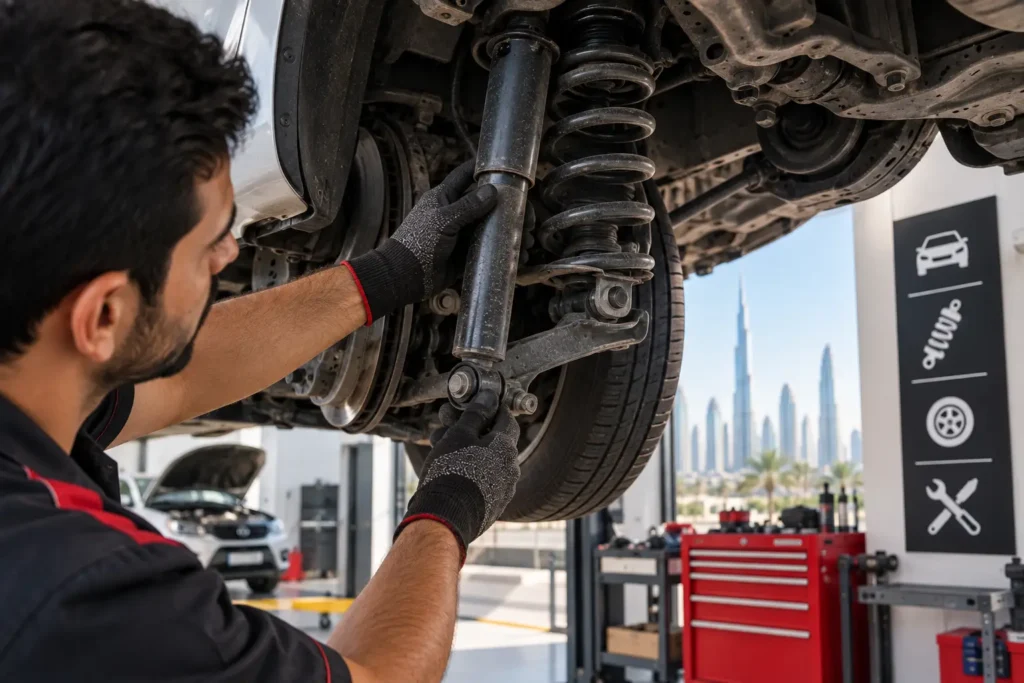
Start by looking for obvious fluid leakage, damaged components or unusual tyre wear.
During normal driving, pay attention to how the vehicle behaves after bumps, during braking and while cornering.
Some drivers also use the traditional bounce test by pushing down on one corner of the vehicle and observing how it settles. However, this should only be treated as a basic indication, not a definitive diagnosis. A professional inspection and road test can identify problems that may not be obvious from a simple bounce test.
Do Dubai Driving Conditions Affect Shock Absorbers?
Dubai’s driving environment can make suspension condition especially important.
Frequent speed bumps, potholes, construction areas and repeated stop-and-go driving can expose suspension components to repeated impacts and movement. Heavy traffic can also mean more frequent braking, acceleration and lane changes.
The effect is not the same for every vehicle. Vehicle weight, mileage, driving style, road conditions and the condition of other suspension components all influence how quickly shocks wear.
Regular suspension inspections can help identify worn components before they begin affecting tyres, handling or braking stability.
How Long Do Shock Absorbers Last?
There is no single mileage or time period that applies to every vehicle.
Shock absorber life depends on the vehicle, road conditions, load, driving habits and the condition of the rest of the suspension. Some manufacturers and suspension specialists provide inspection or replacement guidelines, but the actual condition of the component should also be considered.
Rather than waiting for a specific mileage, watch for changes in ride quality, handling, tyre wear and visible component condition.
Should You Replace One Shock Absorber or Both?
If one shock absorber has clearly failed, it is important to have the opposite side inspected as well.
Shock absorbers on the same axle work together, and replacing only one side can leave the vehicle with components of significantly different condition. The correct approach depends on the vehicle manufacturer’s specifications and the condition of both sides.
A technician can determine whether one or both need replacement after inspection.
When Should You Get Your Suspension Checked?
Do not wait until the vehicle becomes difficult to drive.
Arrange an inspection if you notice repeated bouncing, excessive nose diving, unusual body roll, fluid leakage, uneven tyre wear or persistent suspension noises.
If inspection confirms that your shocks are worn, the right shock absorbers for your vehicle should be selected based on its make, model, specifications and suspension setup.
Fortune Plus Auto supplies shock absorbers for different vehicle applications, including KYB and OEM shock absorber options, making it easier to find the correct component for your vehicle.
Final Thoughts
Shock absorbers gradually lose their effectiveness, which makes early warning signs easy to overlook. A bouncing ride, excessive body movement, uneven tyre wear, fluid leakage or unusual suspension noise can all be reasons to investigate further.
Not every symptom means the shock absorber needs replacing, but getting the suspension checked when you notice a change can help prevent a small problem from affecting other components.
For Dubai drivers, regular inspection is particularly useful when the vehicle regularly encounters speed bumps, rough roads and heavy stop-and-go traffic.
If your shock absorbers are confirmed to be worn, choosing the correct replacement part and addressing related suspension issues at the same time can help restore proper ride control and stability.