




Brake Shoes in Dubai — OEM & Quality Aftermarket at Fortune Plus Auto
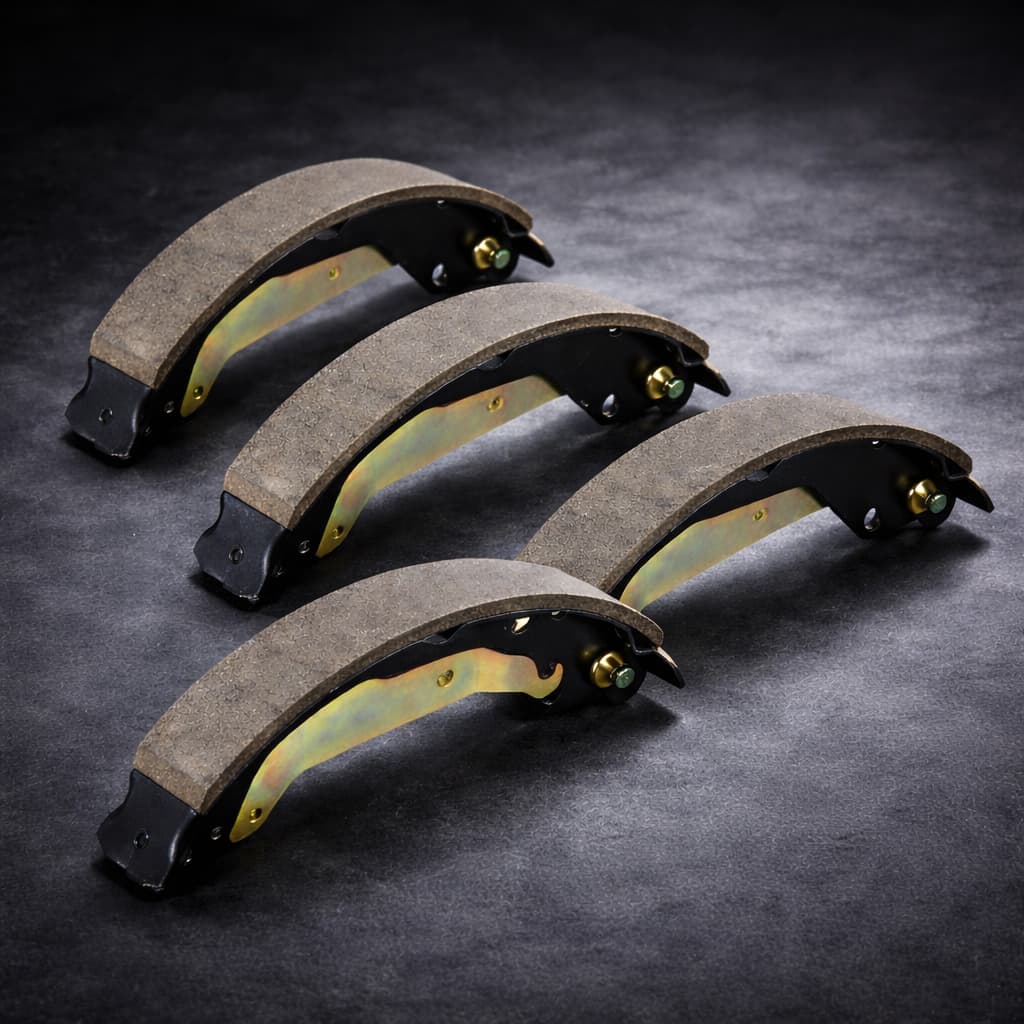
While disc brakes have become the dominant braking technology on front axles across all modern vehicle classes, drum brakes — and the brake shoes that create the friction within them — remain widely used on the rear axles of a significant proportion of the vehicles on Dubai’s roads. Economy passenger cars, compact SUVs, commercial vans, minibuses, pickup trucks, and light commercial vehicles all continue to use drum brakes at the rear, where the lower heat demands of rear braking make drum technology a cost-effective and reliable solution. Brake shoes are the friction components within these drum brake systems, and they are every bit as safety-critical as the disc brake pads on the front axle. At Fortune Plus Auto in Dubai, we supply brake shoes from OEM and trusted aftermarket manufacturers for the full range of vehicle applications using drum brakes in the UAE market.
Understanding how drum brakes work, what determines the quality of a brake shoe, and when and how to replace them is essential knowledge for anyone maintaining a vehicle — or managing a workshop’s brake service offering. Our team at Ras Al Khor is here to provide both the parts and the expertise.
How Drum Brakes and Brake Shoes Work
A drum brake system consists of a steel drum — mounted to the wheel hub and rotating with it — inside which two curved brake shoes are mounted on a fixed backing plate. Each brake shoe carries an arc-shaped friction lining on its outer face. When the brake pedal is applied, a wheel cylinder pushes the shoes outward against the inner face of the rotating drum, and the friction between the lining and the drum surface creates the braking torque that slows the wheel. The primary shoe — positioned in the forward arc — benefits from a self-energising effect where the drum’s rotation pulls the shoe harder into contact as braking force increases; the secondary shoe is positioned to absorb the trailing force. This self-energising characteristic makes drum brakes effective at generating high braking force with relatively modest hydraulic pressure — which is why they remain useful on rear axles of commercial vehicles and economy cars where cost efficiency matters.
The drum brake’s primary disadvantage compared to disc brakes is heat dissipation. When the brake shoes generate friction against the drum, the heat produced is contained within the enclosed drum assembly. Under repeated heavy braking — on steep descents, in stop-start urban traffic with frequent firm brake applications, or in commercial vehicle applications with high load weights — the drum temperature rises, and the phenomenon called brake fade can occur: the friction coefficient of the lining material drops as temperature increases, requiring greater pedal force for the same braking effect. This is why drum brakes are more common at the rear than the front — the front axle, which provides 60–70% of the total braking force and experiences the most heat, benefits most from the disc’s open, air-cooled design.
Brake Shoe Friction Materials: Quality Matters
The friction lining bonded or riveted to the brake shoe’s metal carrier is the component that does the actual braking work. Its performance characteristics — the friction coefficient, the fade resistance at operating temperature, the wear rate, the recovery after water ingress, and the noise and vibration behaviour — are entirely determined by the formulation of the friction material. High-quality friction material produces:
- Consistent friction coefficient throughout the operating temperature range — ensuring pedal feel and stopping distance do not change as the brakes heat up
- High fade resistance — maintaining full braking effectiveness under sustained heat loading
- Low wear rate — maximising service life and reducing the frequency of replacement
- Good water recovery — restoring full friction quickly after rain or water crossing
- Low noise signature — minimising the squeal and groan that drum brake systems are prone to when friction material formulation is poorly matched to the drum material
Cheap, uncertified brake shoe friction materials frequently compromise on one or more of these properties — delivering a brake shoe that passes a visual fitment check but fails to provide consistent, reliable braking under the demanding conditions of UAE driving. At Fortune Plus Auto, we supply brake shoes only from manufacturers whose friction material formulations meet established certification standards and whose products we have confidence recommending in safety-critical applications.
Brake Shoe Brands and Specifications
Our brake shoe range draws from the same certified manufacturer base as our brake pad inventory. We supply brake shoes from OEM-grade manufacturers including ASIMCO and other established friction material specialists whose products cover the Japanese, Korean, and European vehicle applications most common in the UAE market. For vehicles where OEM part number matching is required — fleet vehicles under warranty, premium models, or workshop customers requiring factory-specification parts documentation — we also supply OEM-equivalent brake shoes cross-referenced by vehicle application.
When to Replace Brake Shoes
Unlike disc brake pads, which can often be visually inspected relatively easily with the wheel on, drum brake shoes require wheel and drum removal for a proper condition assessment. The following intervals and indicators should guide brake shoe inspection and replacement:
- Mileage inspection at every 20,000–30,000 km service: remove the drum and measure the remaining lining thickness. Replacement is warranted when lining thickness reaches 1.5mm or less.
- Grinding, scraping, or metallic noise from the rear when braking: the metal backing of the shoe is making direct contact with the drum surface — an advanced wear condition that has caused drum scoring and requires immediate attention.
- Brake pull to one side under moderate braking: suggests uneven brake shoe wear or a seized wheel cylinder preventing one side from releasing fully — both require investigation.
- Reduced braking effectiveness from the rear axle: a spongy pedal or extended stopping distance often has a drum brake contribution that is masked by the front brakes’ dominance.
- Contamination from oil or brake fluid leaks: a leaking rear axle seal or failing wheel cylinder deposits oil or brake fluid on the shoe lining — contaminated linings must be replaced regardless of thickness, as oil permanently degrades the friction material’s performance.
Brake Shoes and the Complete Drum Brake Service
A professional drum brake service goes beyond simply replacing the shoes. When shoes are replaced, the entire drum brake assembly should be assessed and the following components addressed as required:
- Brake drum: measure inside diameter for wear and check for scoring, heat cracking, or bell-mouthing. Drums that are within the maximum allowable diameter but heavily scored should be machined before fitting new shoes for proper break-in. Drums that have exceeded maximum diameter must be replaced.
- Wheel cylinder: the hydraulic cylinder that pushes the shoes outward. Inspect for brake fluid leakage from the cylinder boots — a leaking wheel cylinder contaminates the shoes and must be replaced.
- Brake hardware: return springs, hold-down springs, and adjusters should be replaced with the shoes — these components fatigue and weaken over the same service cycle as the shoes, and reusing worn hardware on new shoes causes premature wear and noise.
- Self-adjusting mechanism: most modern drum brakes have a self-adjusting mechanism that periodically tightens the shoe-to-drum clearance as the lining wears. A seized or corroded adjuster prevents this from working — leaving an increasing pedal travel as shoes wear. Clean and lubricate or replace the adjuster during every brake shoe service.
For the complete brake system — including brake pads in Dubai for front axle service, brake discs, brake fluid, and all the hardware listed above — Fortune Plus Auto is your single-source supplier. We carry the full range of brake system components for both retail customers and trade buyers.
Drum Brake Maintenance in Dubai’s Climate
Dubai’s combination of coastal humidity, salt air in near-coastal areas, and the abrasive silica dust present throughout the region creates a particularly corrosive environment for drum brake hardware. The steel backing plates, springs, and drum surfaces are susceptible to rust formation — particularly on vehicles that are regularly exposed to water in car washing facilities without adequate drying and that sit overnight in humid conditions. Rust bridging between the shoe and drum can cause the shoe to stick to the drum surface on initial morning start-up, producing a sharp bang and a brief pull as the bond breaks. Regular brake cleaning and lubrication of the correct contact points — shoe lands, adjuster threads, and pivot pins, while keeping friction material surfaces clean and dry — significantly extends hardware life and prevents the sticky shoe phenomenon.
Brake Shoes for Trade and Workshop Customers
Drum brake services are a consistent part of the workflow for any workshop serving the economy and commercial vehicle segments that are well-represented in Dubai’s vehicle population. Fortune Plus Auto’s auto spare parts supplier Dubai wholesale supply covers brake shoes across the major drum brake applications in our market, with trade pricing and stock availability to support high-volume workshop demand. Contact our trade team for account information.
Visit Fortune Plus Auto for Brake Shoes in Dubai
Open Monday to Saturday, 8:00 AM to 8:00 PM at 44 18b Street, Ras Al Khor Industrial Area 2, Dubai. Bring your vehicle make, model, year, and drum size if known. Our team will identify the correct brake shoe application, confirm stock, and supply both the shoes and any related hardware you need for a complete and professional drum brake service. Call +971 50 206 9239 for stock confirmation before travelling.
Who We Serve
- Auto spare parts retailers seeking consistent stock
- Workshop and service centers requiring dependable components
- Fleet companies needing long-term parts supply
- Individual car owners and enthusiasts
How We Add Value

Sourcing and Selection
We source parts from reputable manufacturers and trusted supply chains that meet or exceed industry standards for reliability and safety.

Quality Verification
Each part undergoes quality checks to ensure it delivers performance, fit, and durability before being approved for sale.

Efficient Supply
With a strong logistics network and local operations in Dubai, we ensure timely delivery and availability for our customers.
Looking for Quality Auto Spare Parts?
We supply reliable automotive components trusted by workshops, retailers, and fleet operators. Contact us for product availability, expert assistance, and bulk supply options.