








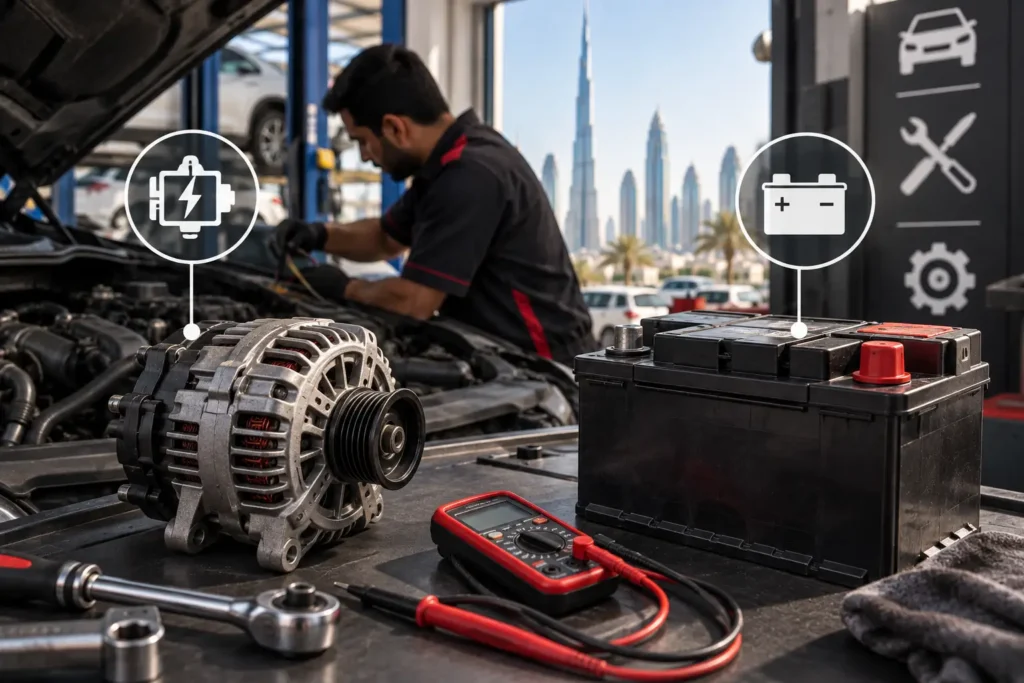
When a car struggles to start, the battery is often the first thing drivers blame. But the real problem can also be the alternator, which keeps the battery charged while the engine is running. Because both components are part of the same electrical system, their symptoms can sometimes look very similar.
For drivers in Dubai, this can be especially confusing. High temperatures, frequent traffic, long periods of idling and heavy use of air conditioning can place additional stress on the vehicle’s electrical system.
So, how can you tell whether you have a battery or alternator problem?
The key is to look at what happens when you start the car, how it behaves after a jump-start and whether electrical problems continue while driving.
What Does a Car Battery Do?
The battery provides the electrical power needed to start the engine. It also supplies electricity to lights, electronics and other systems when the engine is off or when the alternator cannot provide enough power.
A weak battery may struggle to deliver enough power to the starter motor, particularly after the car has been parked for several hours.
Common signs include:
- Slow engine cranking
- Clicking when you turn the key or press the start button
- Difficulty starting the car after sitting overnight
- Corrosion around the battery terminals
- A swollen or damaged battery case
- The car starting normally after a jump-start
If your battery is reaching the end of its service life, replacing it with the correct specification is important. Choosing the right car battery in Dubai can help ensure the vehicle receives the correct starting power for its electrical requirements.
What Does an Alternator Do?
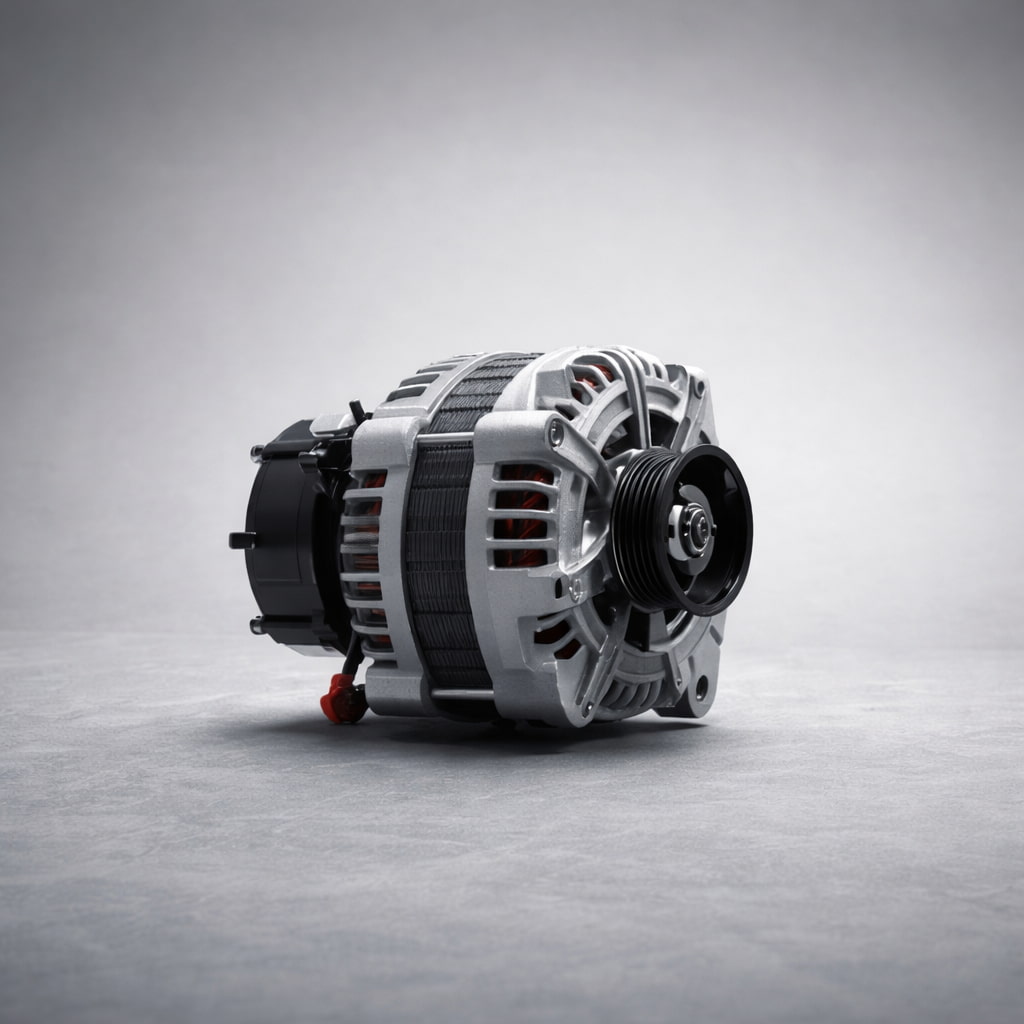
The alternator works after the engine starts. Its main job is to generate electricity for the vehicle’s electrical systems and recharge the battery while you drive.
If the alternator is not charging correctly, the battery gradually loses its stored power. This can eventually leave you with a car that will not start, even if the battery itself is relatively new.
Possible signs of an alternator problem include:
- Battery or charging warning light appearing on the dashboard
- Headlights becoming dim or flickering
- Electrical accessories behaving strangely
- The engine stalling while driving
- The battery repeatedly becoming discharged
- A whining or unusual noise from the engine bay
A faulty alternator does not always fail completely at once. Charging performance can gradually become weaker before the vehicle stops running.
Battery vs Alternator: What’s the Difference?
The easiest way to understand the difference is to consider when the problem happens.
| Clicking or no crank when starting | Weak battery or connection |
| Slow engine cranking | Battery |
| Car starts after a jump and keeps running normally | Battery may be weak |
| Car starts with a jump but soon stalls | Possible alternator/charging problem |
| Battery warning light while driving | Charging system/alternator |
| Dim or flickering lights while driving | Possible alternator problem |
| Battery repeatedly goes flat | Battery, alternator or another electrical issue |
| Corroded or damaged battery | Battery-related issue |
These are useful clues, but they are not a definite diagnosis. A weak battery, poor connection, damaged cable or charging-system fault can produce similar symptoms.
Signs You May Have a Bad Battery
1. The Engine Cranks Slowly
One of the most common battery symptoms is slow cranking. Instead of the engine turning over quickly, it sounds weak or sluggish when you try to start the car.
This is particularly noticeable after the vehicle has been parked for several hours.
2. You Hear Repeated Clicking
A rapid clicking sound when trying to start the car can indicate that the battery does not have enough power to operate the starter properly.
However, loose or corroded connections can cause similar symptoms, so the battery and its terminals should be checked rather than assuming the battery needs replacement.
3. The Car Starts After a Jump-Start
If the vehicle starts after using jumper cables and then operates normally, the battery may have lost its ability to hold a sufficient charge.
But if the same problem happens repeatedly, the charging system should also be tested.
4. There Is Visible Battery Damage
A swollen battery case, damaged terminals or significant corrosion are reasons to have the battery inspected.
Dubai’s high temperatures can also accelerate battery deterioration, making regular inspection particularly useful.
Signs You May Have a Bad Alternator
1. The Battery Warning Light Appears While Driving
A battery-shaped warning light does not necessarily mean the battery itself has failed. It can indicate a problem with the vehicle’s charging system.
If the light stays illuminated while the engine is running, the alternator and charging circuit should be checked.
2. Lights Become Dim or Flicker
If headlights or interior lights become noticeably dim, particularly when several electrical systems are operating, the alternator may not be maintaining a stable electrical supply.
3. The Car Dies Shortly After a Jump-Start
If your car starts with jumper cables but soon loses power or stalls, the alternator may not be recharging the battery properly.
This is an important distinction between a simple starting problem and a potential charging-system failure.
4. The Battery Keeps Going Flat
A battery that repeatedly loses its charge does not automatically mean you need another battery.
The alternator, battery connections and other parts of the electrical system should be tested to determine why the battery is losing power.
How to Tell If It’s the Battery or Alternator
If your car won’t start, start by paying attention to what happened before the failure.
If the engine cranks slowly or only clicks, a weak battery is one possibility.
If the car starts with a jump-start and continues running normally, the battery may be unable to hold enough charge.
If the car starts but the battery warning light remains on, electrical systems become weak or the engine stalls, the charging system should be inspected.
A proper diagnosis should include testing the battery’s condition and checking whether the alternator is producing the correct charging output. The battery terminals and electrical connections should also be inspected.
This is more reliable than replacing parts based only on symptoms.
Why Dubai’s Heat Can Affect Battery and Alternator Problems
Dubai’s hot climate can make vehicle maintenance more demanding. High temperatures can accelerate battery deterioration, while heavy use of air conditioning and electrical equipment increases the load placed on the charging system.
Stop-and-go traffic can add another challenge because vehicles may spend long periods idling or moving slowly in hot conditions.
That does not mean every battery or alternator problem is caused by heat. Age, normal wear, poor connections and other electrical faults can also contribute.
Regular inspections can help identify a developing problem before the vehicle refuses to start.
When Should You Have the Charging System Checked?
Consider getting the electrical system inspected if:
- Your car needs frequent jump-starts
- The battery warning light comes on while driving
- Headlights are unusually dim or flickering
- The vehicle stalls unexpectedly
- A recently installed battery repeatedly becomes discharged
- You notice unusual noises from the alternator area
- The car has difficulty starting despite having a relatively new battery
If testing confirms that the alternator is faulty, replacing it with the correct application-specific component is important. You can explore suitable car alternators in Dubai based on your vehicle’s make, model and engine requirements.
Battery or Alternator: Don’t Guess the Fault
The battery and alternator work together, so a problem with one can eventually affect the other. That’s why replacing the battery simply because the car won’t start may not solve the underlying problem.
The best approach is to look at the symptoms and then have the battery, charging system and connections properly tested.
For Dubai drivers, paying attention to warning lights, starting behaviour and repeated electrical problems can help catch issues early. A simple electrical-system inspection can often prevent a minor starting problem from becoming an unexpected breakdown.
If you are unsure whether your vehicle needs a battery, alternator or another electrical component, identifying the actual cause first can save both time and unnecessary replacement costs.