






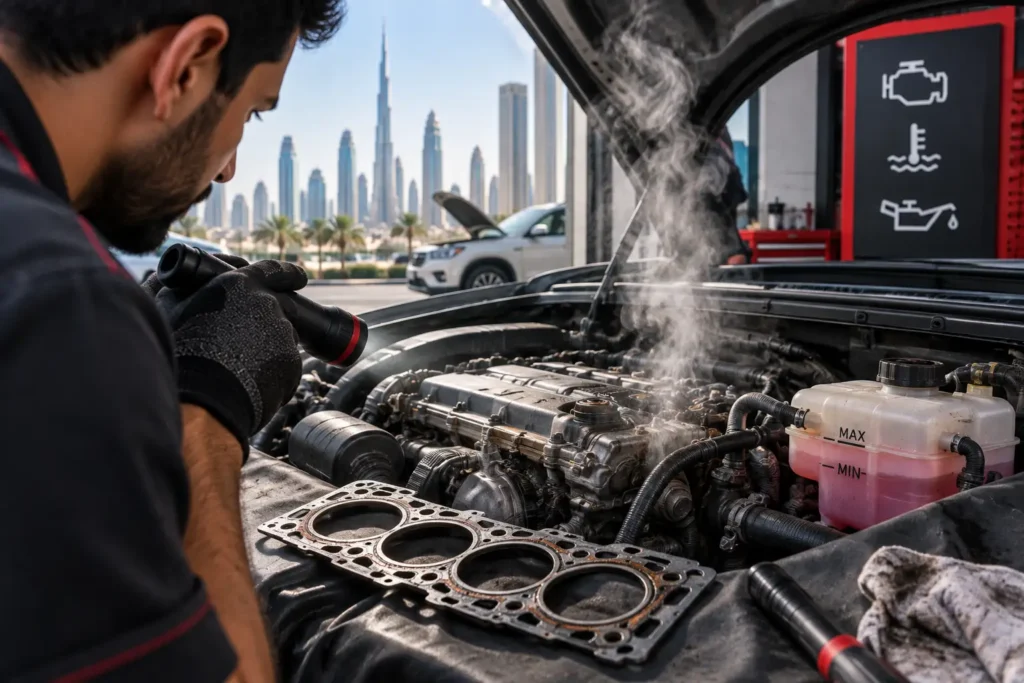
A head gasket is a critical engine component that seals the space between the engine block and cylinder head. It keeps engine oil, coolant and combustion gases separated while the engine is running.
When the gasket fails, it can affect engine performance and, if ignored, lead to serious engine damage. In Dubai, high temperatures, heavy traffic and prolonged idling can place additional demands on the cooling system, making it important to address overheating and coolant problems early.
Here are seven warning signs that could indicate a head gasket problem.
What Does a Head Gasket Do?
The head gasket creates a seal between the engine block and cylinder head. It helps prevent:
- Engine oil from mixing with coolant
- Coolant from entering the combustion chambers
- Combustion gases from entering the cooling system
- Loss of compression between cylinders
A failed head gasket is often associated with overheating, although cooling-system faults and other engine problems can produce similar symptoms.
If replacement is required, choosing the correct component for the vehicle is essential. Fortune Plus Auto supplies Head Gasket options from established manufacturers for different vehicle applications.
7 Warning Signs of Head Gasket Failure
1. Engine Overheating
Repeated or unexplained overheating is one of the most important warning signs.
Dubai’s high temperatures and stop-and-go traffic can make cooling more demanding, but normal hot weather should not cause a healthy engine to repeatedly overheat.
Possible causes include:
- Low coolant
- Radiator problems
- Faulty thermostat
- Cooling fan failure
- Water pump problems
- Coolant leaks
- Head gasket failure
If the temperature gauge repeatedly rises into the overheating range, the vehicle should be inspected rather than continuing to drive it.
2. Thick White Smoke From the Exhaust
Persistent white smoke from the exhaust, particularly after the engine has warmed up, can indicate that coolant is entering a combustion chamber.
When coolant burns inside the engine, it can produce noticeable white exhaust smoke.
However, light vapour during a cold start does not automatically mean a failed head gasket. Condensation can produce temporary white vapour. The concern is persistent thick smoke combined with other symptoms such as coolant loss, overheating or poor engine performance.
3. Milky or Frothy Engine Oil
Engine oil that becomes creamy, light brown or milky can indicate that coolant has mixed with the oil.
This can happen when a head gasket loses its seal, although other mechanical faults can also cause fluid contamination.
Contaminated oil may not provide the protection the engine needs, so the vehicle should be inspected promptly if an unusual appearance is noticed around the oil filler cap or during an oil check.
4. Unexplained Coolant Loss
If the coolant level continues to fall without an obvious external leak, further investigation is needed.
Coolant can escape through hoses, radiators, water pumps and other cooling-system components. If no external leak can be found, coolant may potentially be entering the engine.
Pay particular attention if coolant loss occurs alongside:
- Overheating
- White exhaust smoke
- Rough engine operation
- Milky engine oil
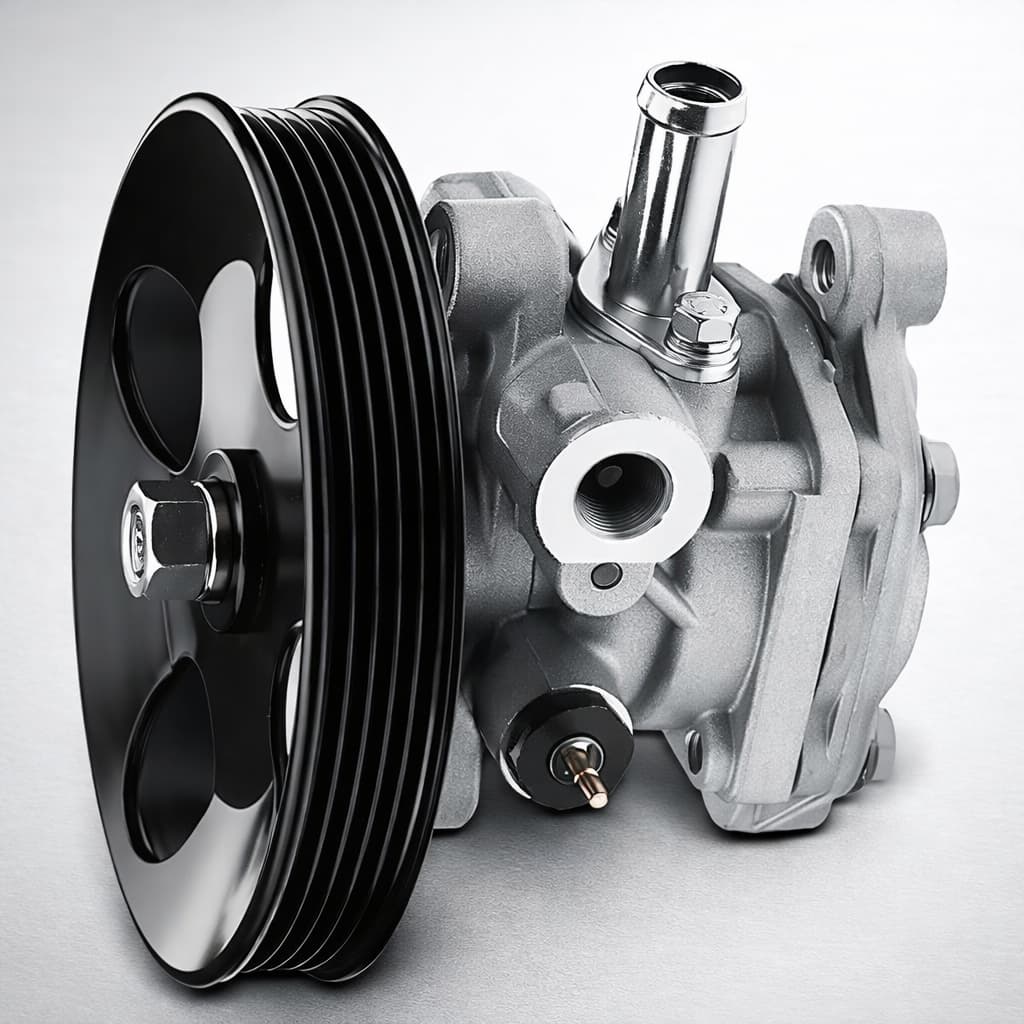
A faulty Water Pump can also contribute to overheating, so the cooling system should be checked before assuming that the head gasket itself has failed.
5. Rough Idling or Engine Misfires
A damaged head gasket can affect cylinder compression and combustion, potentially causing the engine to run unevenly.
You may notice:
- Shaking while idling
- Poor acceleration
- Uneven engine operation
- Reduced performance
- An engine warning light
These symptoms can also be caused by spark plugs, ignition components, fuel-system problems or other engine faults. A misfire alone therefore does not confirm head gasket failure.
6. Bubbles in the Coolant Reservoir
Unusual bubbling in the coolant reservoir can sometimes indicate that combustion gases are entering the cooling system.
The cooling system operates under pressure, and a damaged head gasket can allow combustion pressure into the coolant passages.
Never remove a radiator cap or coolant reservoir cap while the engine is hot. Pressurised coolant can cause serious burns. If bubbling is suspected, allow the vehicle to cool and have the system professionally inspected.
7. Loss of Engine Performance
A head gasket problem can sometimes affect engine compression, resulting in noticeable performance changes.
Possible symptoms include:
- Reduced power
- Poor acceleration
- Rough running
- Difficulty starting
- Misfires
Performance loss can have many causes, so it becomes more significant when combined with overheating, coolant loss, white smoke or contaminated engine oil.
What Causes Head Gasket Failure in Dubai?
A head gasket does not normally fail simply because a vehicle is driven in Dubai. In many cases, failure occurs after an engine has experienced excessive or repeated overheating.
Common contributing factors include:
Cooling-System Problems
A faulty radiator, thermostat, cooling fan, hose or Cooling System Parts can prevent the engine from maintaining the correct operating temperature.
Low Coolant
Insufficient coolant reduces the cooling system’s ability to remove heat. A recurring coolant loss should always be investigated rather than repeatedly topping up the reservoir.
Heavy Traffic and Idling
Stop-and-go traffic and extended idling can increase the demands placed on the cooling system, particularly when the air conditioning is being used heavily.
Traffic itself does not cause head gasket failure, but repeated overheating should never be ignored.
Poor Maintenance
Old coolant, unresolved leaks or neglected cooling-system components can increase the risk of overheating and related engine problems.
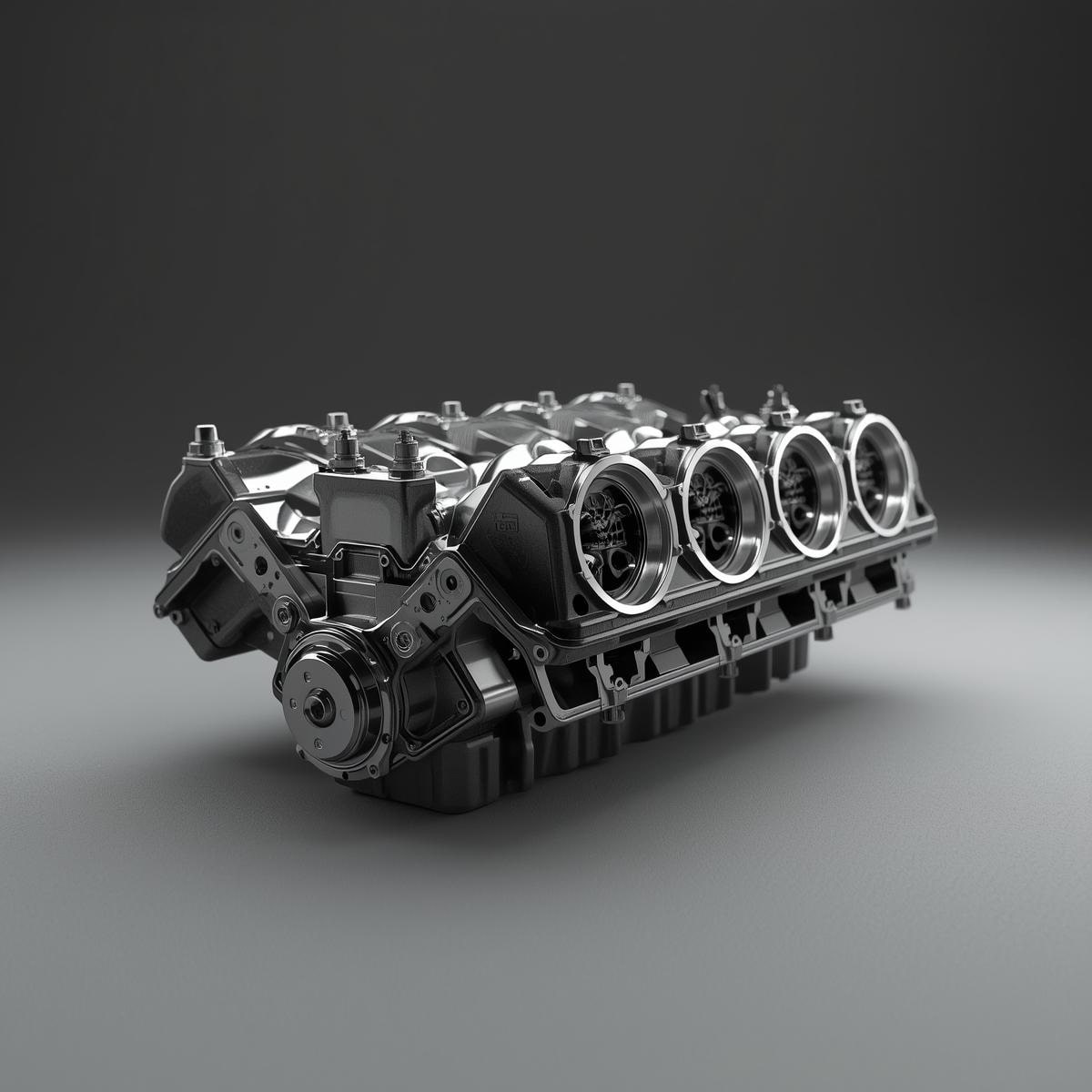
This is why other Engine Parts should also be inspected when diagnosing an overheating issue.
How Is Head Gasket Failure Confirmed?
Symptoms alone cannot confirm a failed head gasket because several other problems can produce similar signs.
Depending on the symptoms, a technician may use:
- Cooling-system pressure testing
- Compression testing
- Cylinder leak-down testing
- Combustion-gas testing
- Engine oil and coolant inspection
Professional testing helps determine whether the head gasket is actually failing or whether another component is responsible.
This is important because head gasket replacement is a significant repair, and the underlying cause of overheating should also be identified.
Can You Drive With a Suspected Head Gasket Problem?
Continuing to drive an overheating vehicle can result in further engine damage.
If the temperature gauge reaches the overheating range, you notice significant white smoke, or the coolant level is dropping rapidly, stop somewhere safe and allow the vehicle to cool.
Do not open the cooling system while it is hot.
Getting the vehicle inspected early can help identify whether the problem is related to the head gasket, cooling system or another engine component.
How to Reduce the Risk of Head Gasket Problems
A head gasket is not normally a routine replacement component. Preventing excessive engine heat is one of the best ways to protect it.
Keep these practices in mind:
- Follow the manufacturer’s maintenance schedule.
- Check coolant levels regularly.
- Investigate repeated overheating immediately.
- Do not ignore coolant leaks.
- Have the radiator, thermostat and cooling fan checked when necessary.
- Pay attention to changes in engine temperature and performance.
- Avoid driving an overheating vehicle.
Regular inspection of Engine Parts and cooling-system components can help identify problems before they develop into more serious engine damage.
Final Thoughts
A failing head gasket can produce several warning signs, including overheating, white exhaust smoke, coolant loss, milky engine oil, misfires and reduced engine performance.
However, one symptom alone does not prove that the head gasket has failed. Similar problems can be caused by the radiator, thermostat, water pump, ignition system or other components.
For drivers in Dubai, the best approach is to address overheating and coolant problems early and have unusual symptoms professionally diagnosed.
If a replacement is required, Fortune Plus Auto provides Head Gasket and other Engine Parts for different vehicle applications. Always confirm the correct part according to the vehicle’s make, model, year and engine specification.