




Engine Belt in Dubai
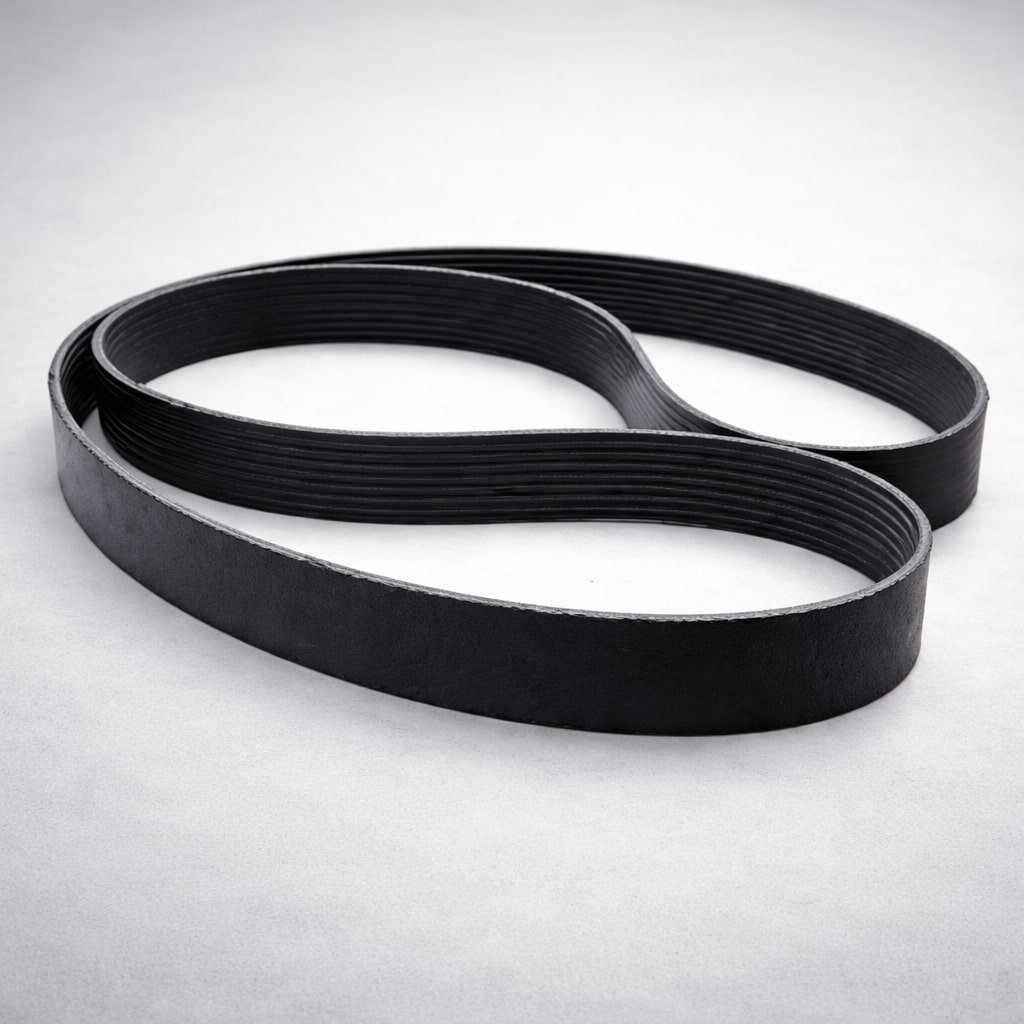
Engine belts are essential components that transfer power between different engine parts, ensuring smooth and efficient operation. A high-quality engine belt supports reliable performance of systems such as the alternator, power steering, and air conditioning.
Engine Belt in Dubai — Timing Belts, Drive Belts & Tensioners at Fortune Plus Auto
Engine belts are among the most deceptively critical components in the vehicle — visible during an engine bay inspection, relatively inexpensive to replace proactively, and yet among the most catastrophically expensive to neglect. On interference engines, a broken timing belt causes immediate, irreversible valve-to-piston collision damage that can destroy an engine worth tens of thousands of dirhams in a fraction of a second. An accessory drive belt that fails while driving simultaneously disables the alternator, power steering pump, water pump, and air conditioning compressor — leaving the driver stranded and potentially causing secondary damage to every one of those components. At Fortune Plus Auto in Dubai, we supply engine belts and complete belt service kits from trusted manufacturers to keep every engine’s belt systems reliable, correctly tensioned, and replaced on schedule before problems develop.
Understanding which belts your engine uses, what their manufacturer-specified service intervals are, and what related components should be replaced simultaneously is the foundation of responsible, cost-effective engine maintenance. Our team at Ras Al Khor Industrial Area 2 has the product knowledge, the parts stock, and the brand range to support both proactive scheduled belt servicing and urgent belt replacement for customers across Dubai and the wider UAE market.
Types of Engine Belts: What Your Engine Uses
Timing Belt (Cambelt)
The timing belt is the critical synchronisation link between the crankshaft and the camshaft or camshafts in belt-driven overhead camshaft engines. It is a high-specification reinforced rubber belt with precise tooth geometry that meshes with matching sprocket teeth on both the crankshaft and camshaft pulleys, maintaining the precise valve timing relationship that ensures intake and exhaust valves open and close in the correct sequence relative to piston position. Get this timing relationship even slightly wrong — by as little as one tooth position — and the engine either runs very poorly or destroys itself depending on whether it is an interference or non-interference design.
Timing belts are a service life component with a specific manufacturer-specified replacement interval — typically between 60,000 km and 100,000 km depending on the engine family, with most manufacturers also specifying a calendar age replacement of five years irrespective of accumulated mileage. Critically, the belt does not generally show visible external signs of imminent failure before it breaks. It does not squeal, vibrate excessively, or provide a clear audible warning the way a worn accessory belt does. This silent failure mode is exactly why strict adherence to the service interval is not optional — it is the only protection available against the catastrophic engine damage that belt failure causes.
On an interference engine — where the valves and pistons share overlapping bore positions at different points in the cycle — timing belt failure at operating speed causes the pistons to strike open valves with full combustion force, bending valves, damaging pistons, and frequently cracking cylinder heads. The resulting repair typically requires complete cylinder head replacement, piston replacement, and extensive engine assembly work. This is not a recoverable failure without a rebuild costing many multiples of what a proactive belt replacement would have cost.
Timing Chain Systems
Many modern engines — particularly those produced by Japanese manufacturers in recent generations — use a timing chain rather than a timing belt. Timing chains are metal link assemblies that are intended to last the engine’s lifetime under normal operating conditions and therefore do not have a fixed service interval in the same way as rubber timing belts. However, timing chains are not indestructible. They can and do stretch over high mileage — particularly when oil change intervals are not maintained, since the chain lubrication depends entirely on clean engine oil delivered at correct pressure. A stretched timing chain causes progressive valve timing retardation that degrades power output, fuel economy, and emissions compliance. In advanced cases, a sufficiently stretched chain can jump a sprocket tooth under the shock loading of rapid acceleration or deceleration, causing an immediate timing event that damages the engine.
We stock timing chain kits, timing chain tensioners, and timing chain guides for common applications where timing chain maintenance is required or where chain-related noise or timing issues have been identified. Our team can advise on whether the symptoms presenting with a specific vehicle are consistent with timing chain wear and what the correct remedy involves for that engine family.
Accessory Drive Belt (Serpentine Belt)
The accessory drive belt routes around the crankshaft pulley and all front-mounted engine accessories: the alternator, the power steering pump, the water pump on engines where it is externally driven, the air conditioning compressor, and where fitted, the vacuum pump. A single serpentine belt handles all of these loads simultaneously, guided by idler pulleys and tensioned by a spring-loaded or manual tensioner. Unlike the timing belt, the accessory drive belt does typically provide warning before failure — audible squealing, visible cracking along the rib valleys, fraying at the edges, or glazing on the contact face. However, waiting for these warning signs before replacement is a false economy: a belt that has deteriorated to the point of making noise has already exceeded its safe service condition and may fail completely without further notice at any moment.
Complete Timing Belt Kit: The Professional Standard
A timing belt replacement performed without replacing the associated tensioners and idler pulleys is an incomplete service that introduces a significant risk of premature repeat failure — and with it, the same catastrophic engine damage the belt replacement was intended to prevent. The reasoning is straightforward: the belt tensioner, the idler pulleys, and the belt itself have all been subjected to the same mechanical loading cycles, the same temperature extremes, and the same elapsed time since the last service. Their internal bearings and rubber damping elements wear at similar rates to the belt compound itself. If the old tensioner bearing fails six months after a new belt is installed, the belt loses its correct tension, skips teeth on the crankshaft or camshaft sprocket, and causes exactly the same engine damage that a broken belt would have caused — at the full cost of a repeat belt service on top of the engine repair.
A complete timing belt kit — comprising the belt, the tensioner pulley, all idler pulleys, and on many engine applications the water pump, which is driven by the timing belt and equally accessible during the belt service — is the correct professional approach to timing belt work without exception. The additional cost of the tensioners and idler pulleys over the belt alone is minimal relative to the labour cost already invested in the disassembly, and it transforms the service from an incomplete temporary repair into a comprehensive, reliable renewal of the entire timing system.
Accessory Belt Inspection: What to Look For
A thorough accessory drive belt inspection should be part of every scheduled service. The belt should be examined carefully for the following failure indicators:
- Transverse cracks across the rib valleys: hairline cracking perpendicular to the belt’s running direction indicates age-related rubber hardening and elasticity loss. More than three or four visible cracks per centimetre of belt length warrants immediate replacement regardless of the belt’s apparent age or service history.
- Fraying at the belt edges: lateral fraying indicates misalignment between the drive pulleys, a damaged pulley guide flange, or incorrect belt width for the application. The alignment issue must be identified and corrected before fitting the replacement belt.
- Glazing on the rib contact face: a hard, shiny appearance on the rib valleys indicates heat damage or sustained slippage on a misaligned or insufficient-tension pulley. A glazed belt has a significantly reduced friction coefficient and will slip under heavy electrical or mechanical load.
- Chunking, cracking, or missing rib sections: physical material loss from the belt structure is a sign of advanced deterioration. Replace immediately — do not wait for a scheduled service opportunity.
- Squealing or chirping during cold start or under high electrical load: often indicates a worn bearing in one of the driven accessories creating a load spike rather than a defective belt. Diagnose the source before fitting a replacement belt — a new belt installed on a damaged pulley bearing will show premature wear rapidly.
Belt Replacement Intervals: UAE-Specific Guidance
Vehicle manufacturers publish timing belt replacement intervals calibrated for temperate climate operating conditions — typically European or North American ambient temperatures. In the UAE, where ambient air temperatures regularly exceed 45 degrees Celsius in summer months and underbonnet temperatures on a stationary vehicle in direct sun can reach 80 to 90 degrees, rubber belt compound degradation occurs at a meaningfully accelerated rate compared to the conditions assumed by the manufacturer’s published interval. The heat accelerates the oxidation of the rubber compound, the hardening of the material, and the fatigue of the reinforcing fibres embedded within the belt.
For UAE-market vehicles, we recommend applying the calendar age criterion — typically five years from the last documented belt replacement — as the primary replacement trigger in cases where the mileage threshold has not yet been reached. For vehicles acquired without a complete service history, or where the timing belt replacement history is unknown, proactive replacement is strongly recommended regardless of the belt’s apparent visual condition. The cost of an elective belt replacement on schedule is a predictable, modest expense. The cost of engine repair following belt failure on a heavily used vehicle in Dubai’s traffic conditions is an entirely avoidable catastrophe.
Common Engine Belt Applications in UAE Market Vehicles
The UAE vehicle fleet is heavily weighted toward Japanese and Korean makes — Toyota, Nissan, Honda, Hyundai, Kia, and Mitsubishi collectively represent the majority of registered passenger vehicles. Understanding which engines in this dominant fleet segment use timing belts versus timing chains helps prioritise belt service scheduling correctly. As a general guide: Toyota’s older DOHC 4-cylinder engines used in earlier Corolla, Camry, and RAV4 generations used timing belts, while more recent Toyota 4-cylinder engines have transitioned to chains. Honda’s D series, F series, and earlier K series engines as used in the Civic and Accord used timing belts. Nissan’s older QG and GA series engines used belts while the HR series engines use chains. Hyundai and Kia’s older Theta and G4 series engines used belts while their more recent Gamma and Nu series engines have chains. The specific belt or chain status of any given engine must be confirmed from the service manual for that engine family, and our team is available to assist with this identification for customers who are unsure of their engine’s timing arrangement.
Belt Service: The Complete Parts List
When undertaking a timing belt service, the complete parts list should extend beyond the belt kit itself. Cam seals and crank seals that are accessible during the belt cover removal should be proactively replaced. The thermostat is typically accessible during water pump replacement and should be renewed simultaneously. Any other time-based service items that share the same disassembly access path represent a logical and cost-effective opportunity for combined service. Our complete inventory covers all related components for a comprehensive timing belt service from a single supplier visit, eliminating the need for multiple part sourcing trips and ensuring the job is complete in one visit.
Practical Belt Service: Torque and Assembly Guidance
Timing belt installation requires adherence to the manufacturer’s specified installation sequence and torque values with greater precision than most other engine services. Critical steps include: ensuring both crankshaft and camshaft are positioned at the correct timing marks before fitting the new belt; installing the belt in the manufacturer’s specified direction if directional arrows are present on the belt; tensioning the new belt to the manufacturer’s specified deflection or automatic tensioner position; verifying that the timing marks remain correctly aligned after manual rotation of the engine through at least two full crankshaft revolutions; and torquing all timing cover bolts and ancillary fasteners to specification. Errors in any of these steps can result in incorrect valve timing even with a new belt correctly routed. Our team can advise on the correct installation sequence for specific engine families where customers require technical guidance alongside the parts supply.
Engine Belt Supply for Trade and Workshop Customers
Timing belt and accessory drive belt services are among the most frequent scheduled maintenance jobs presented to UAE workshops, making reliable belt supply a core requirement for any active service operation. Fortune Plus Auto’s wholesale supply programme covers engine belts and complete belt kits across the Japanese, Korean, and European engine families that dominate Dubai’s workshop demand. Trade pricing, consistent stock availability across common applications, and account-based ordering are available to qualifying workshop customers. Contact our wholesale team to discuss account terms and the specific belt applications your workshop requires most frequently.
Get Engine Belts at Fortune Plus Auto Dubai
Our Ras Al Khor store is open Monday to Saturday, 8:00 AM to 8:00 PM. Call +971 50 206 9239 with your vehicle make, model, year, and engine code for stock confirmation. Our team will identify whether your engine uses a timing belt or timing chain, confirm the correct belt kit specification and all associated components for a complete service, and ensure you have everything needed to complete the job without a return visit. Address: 44 18b Street, Ras Al Khor Industrial Area 2, Dubai. Ample parking on site.
FAQ
What is the function of an engine belt?
When should engine belts be replaced?
What happens if an engine belt breaks?
Are engine belts expensive in Dubai?
Can I replace an engine belt myself?
Who We Serve
- Auto spare parts retailers seeking consistent stock
- Workshop and service centers requiring dependable components
- Fleet companies needing long-term parts supply
- Individual car owners and enthusiasts
How We Add Value

Sourcing and Selection
We source parts from reputable manufacturers and trusted supply chains that meet or exceed industry standards for reliability and safety.

Quality Verification
Each part undergoes quality checks to ensure it delivers performance, fit, and durability before being approved for sale.

Efficient Supply
With a strong logistics network and local operations in Dubai, we ensure timely delivery and availability for our customers.
Looking for Quality Auto Spare Parts?
We supply reliable automotive components trusted by workshops, retailers, and fleet operators. Contact us for product availability, expert assistance, and bulk supply options.
